Then
Lean
Removed waste from the factory floor.
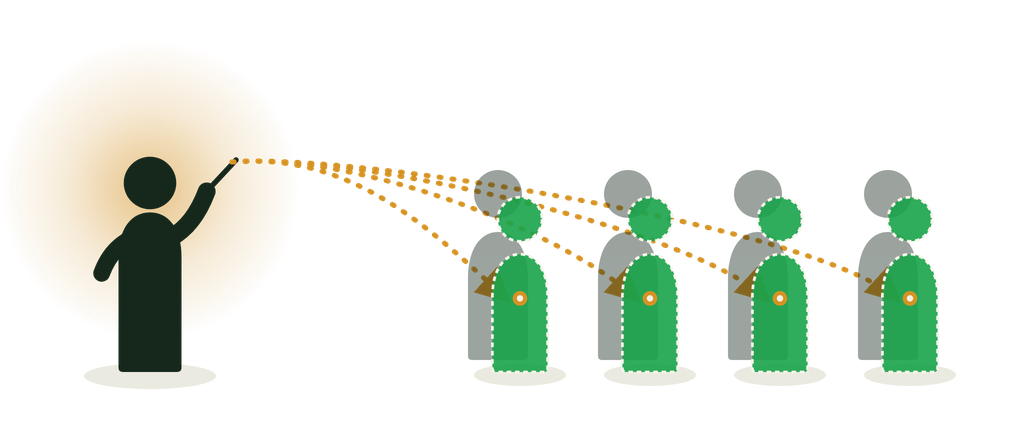
Your best developer and your sharpest designer, ready the moment you need them. No scheduling, no handoff, no next sprint. You can build this today: you put an expert's judgment into a digital twin and work through it. One conductor, a team of expert twins.
Read this as speculative. It is a set of untested bets about where work bottlenecks move once building gets cheap - not a system that already exists. The confident voice is the model arguing its own case. Read the open tensions alongside it.
An open thought
This is thinking in progress, not a finished framework. One idea is load-bearing: the whole model is built around the judgment people can't quite write down — a feel for good architecture, for usability, for when something is right. The twins carry only the part that codifies. That human, implicit knowledge stays the core everything else is arranged around.
01 - What's new
For the first time, you can put what you know - your judgment, your taste, the way you would handle a problem - into an agent that carries it. A digital twin of you.
It works while you sleep, while you are in another meeting, while you are off entirely. And it is not only you: any expert can be encoded the same way, so their judgment is ready the moment anyone needs it.
That is genuinely new. Work has always needed the person present; now a twin stands in for them, so being in the room is optional.
Stop picturing AI as a tool you operate. Picture a version of you that works when you do not.
The biggest untested edge, in the model's own words: it is greenfield-shaped. There is no transition path here for an org that already exists. The honest edges live in Open Tensions & Backlog - worth reading early, not last.
02 - The shift
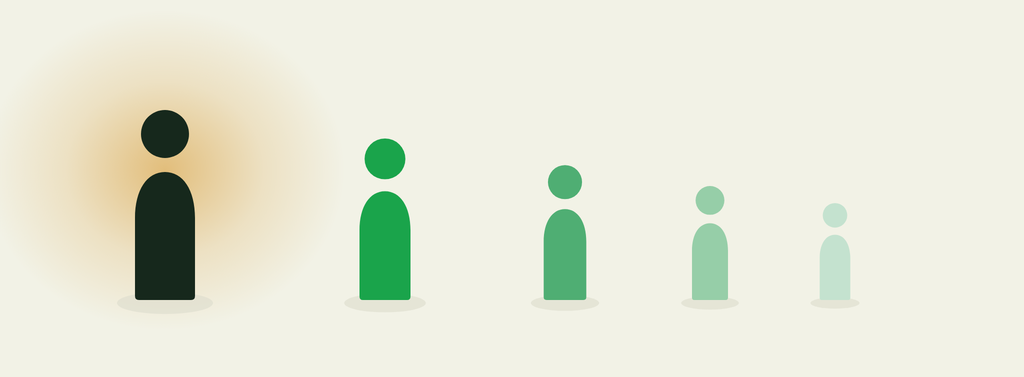
Hand the building to twins and it stops being slow. The moment building is fast, what holds everything up becomes obvious: people's calendars.
When a build took days, waiting an afternoon for the right person did not stand out. When a build takes minutes, that wait is the whole delay. So you encode the experts as twins too - always on, no calendar to book. The waiting goes away.
What is left to improve is the communication itself: the handoffs, the sign-offs, the meaning lost when work passes between people. With building cheap, that communication tax is the whole cost. Cutting it is the whole job. Fewer handoffs, less waiting, fewer rounds, better output. Lean, in its original sense.
It is the same idea each era had: cut the waste between the work. Zero-Handoff just applies it the moment building stopped being the hard part.
Removed waste from the factory floor.
Removed handoff waste from software teams.
Removes the coordination overhead Agile added, now that building is cheap.
Agile's ceremonies existed to manage handoffs. Twins remove the handoffs, so the ceremonies become pure overhead.
Growing a company used to spread talent thin. You could never staff your best architect on every team, so seats filled with whoever was free. Encode the best judgment once and it runs on every project at once. Your best work no longer has to be saved for a few teams.
03 - Two roles
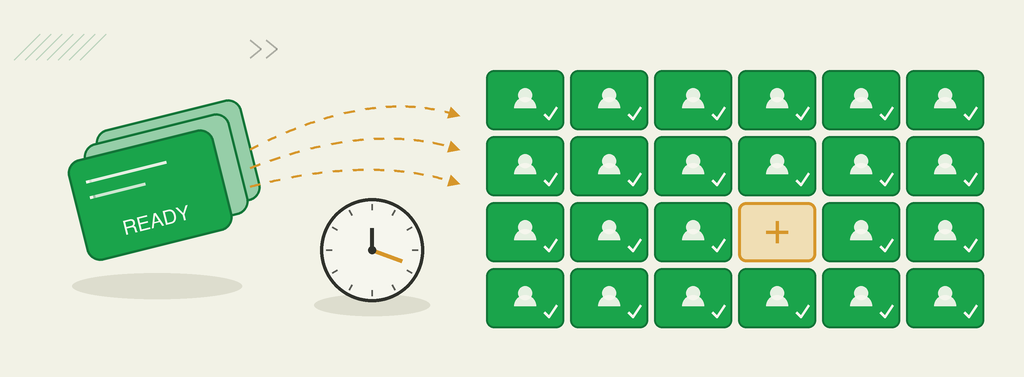
When expertise is always available, the company settles into two jobs, and only two.
Owns a process from start to finish and runs it by directing expert twins.
Owns a craft and encodes it into twins for the conductors to use.
The product builder is simply the conductor of software development - one example of a wider pattern. A conductor is one person working with the reach of a whole department, because their best people stand around them as always-on twins.
Two jobs are left: orchestrate a process, or encode a craft. Everything in between was just handoff.
A one-person setup is only trustworthy if its decisions are checked - and they are, scaled to how far a mistake would travel.
The twin makes the call and the builder ships. No review. Most work lives here.
The twin goes ahead on an assumption it is allowed to make. An expert reviews afterwards and fixes it as they go. Nothing waits.
Too big to undo. A human looks for a few minutes before it goes ahead.
And the experts are not going anywhere. They staff those checks, maintain the twins, and take the hard problems that now come up more often. The repeatable part of their work becomes a twin; their own time moves up to the hard and the new. A promotion, not a layoff.
Those checks are the human half of the checking. The automatic half - tests and known-good cases for each twin, and a spec that rejects broken work - runs alongside it. Together they replace the error-catching the old handoffs used to do for free.
04 - The honest part
Twins remove the waiting, but they do not make communication free. Moving an idea from your head into a twin still loses a little. What is left of the tax piles up at two points, and the human handoffs that used to quietly catch mistakes are gone.
It captures only part of an expert's skill - platform architecture plus some process design, not everything they know. This is why humans are still needed for the parts it doesn't cover.
It is frozen at a moment and can go stale. This is why twins need looking after - and, later, it is exactly what keeps the expert valuable over time.
05 - The model
The builder's one job that can't be handed off is holding the intent and fitting the twins' work into one whole.
It is not being an expert in everything. The builder owns a complete product. What stays theirs is holding that intent together and fitting the twins' work into one whole, plus making the calls the twins are not allowed to make. The twins work in separate crafts and rarely clash, so this is putting pieces together, not refereeing. A conductor, not someone who knows it all.
The engine underneath is a flip: specialists stop doing the work by hand and instead encode their judgment into twins that run on their own. The builder calls on them when needed. Under both sits the platform itself - a paved road of guardrails and ready-made paths that makes the default way to build the safe, fast one.
Someone builds and runs that platform: the AI architect. They design the twins, set the limits each twin works inside, fix the rules they all follow, and keep it all up to date. The builder builds; the AI architect makes building possible.
The conductor isn't the expert on anything. The conductor is the only one holding the whole intent.
An AI model is easy to shape: tell it to answer in a made-up dialect or a casual tone and it does. That is the canvas. By giving it your decisions, judgment, and background knowledge through instructions, prompts, and context, you press a small slice of your expertise onto it. That slice is the twin. Encoding isn't fancy - it is just writing down the limited judgment a specialist already carries.
The experts from section two, seen up close. Their job changes shape rather than disappearing. Each expert keeps their own twin current, maintains the limits it works inside, and still handles the rare cases it cannot: the new, the creative, the things you cannot write down. Their twins form one shared layer that supports every conductor at once - support teams, turned into twins.
SaaS service or API · consumer app · internal tool · data product · platform component · regulated backbone · integration and middleware. One builder owns one complete product; the domain sets the core size.
UX · security · data modeling · platform architecture · process design · compliance · performance and reliability · accessibility · domain SME. Each supplies a twin the builder can consult when needed.
Examples, not a fixed list. Which twins a product actually needs is decided field by field.
07 - Bigger than product
The two roles you met early were not specific to software.
The product builder is just one conductor, the one for the development process. Support, marketing, operations, finance, legal: every process can have its conductor directing expert twins, backed by the experts who keep those twins sharp. The same shape, repeated across the whole company. Not a better way to run a product team; a new way to organize knowledge work.
A few sections ago this was a requirement. It is also the whole point. The companies that win are the ones that back their conductors with strong twins, real expertise, and a clear go-ahead, and then let them decide.
Leadership's job stops being to direct the work and becomes to clear the way for it. The moment managers climb back into the work, the tax they were trying to remove grows straight back.
Every process gets its conductor. Leadership's new job is to back them and then get out of the way.
Development is the favourable domain for a sharper reason than "it's rule-based". Its two hardest un-codifiable moves sit on two people who are in the room anyway: the problem-owner, who holds the real intent under the stated request, and the builder, who weighs the solution into a coherent whole. Neither is handed to a twin. The model never asks a twin to be the tacit part - it takes the specialists' rules and leaves that judgment with the two humans already present.
The specialist middle encodes unusually well on top of that, because so much of development's craft - the design system, the lint set, the architectural standard - is already written down as rules. How well a domain encodes is something you measure, not assume. The full argument is on Codifiability Is a Rate.
The model doesn't capture the tacit work. It relocates it onto humans who were already in the room.
Which is also where it would break: the model works wherever the un-codifiable judgment is naturally split across roles that already exist. Collapse both onto one seat - a therapist, a litigator forming case strategy - and the twin must either capture the tacit part or escalate everything. The reach is wide, not total.
Strip it all back and the whole model is one wager: back your conductors and clear everything out of their way. Give them real twins, real authority, and the room to decide - and the bet is that the companies that do are the ones that win.